Pages

Monday, November 17, 2008

The Great Mughal Emperors of India

The Great Mughal Emperors of India (1526 - 1707)

Babur 1483 - 1526 - 1530 (47)
Humayun 1508 - 1530 - 1540 - 1556 (48)
Akbar 1542 - 1556 - 1605 (63)
Jahangir 1569 - 1605 - 1627 (58)
Shah Jahan 1592 - 1627 - 1658 - 1666 (74)
Aurangzeb 1618 - 1658 - 1707 (89)

Background - The Delhi Sultanate - 1211 - 1526

During the last quarter of the 1100s, Muhammad of Ghor invaded the Indo-Gangetic Plain. Qutb ud-Din, one of his generals, proclaimed himself Sultan of Delhi and established the first dynasty of the Delhi Sultanate, the Mamluk Dynasty (mamluk means "slave") in 1211. Various Moslem dynasties succeeded the Mamluks over the years 1211 to 1526. They presided over a flowering of Moslem / Hindu arts, and were powerful enough to insulate India from the rampaging Mongol hordes in the north in the 1200s, though Tamerlane did get through to sack Delhi in 1398. The Sultanate period came to an end with the arival of Babur in 1526 .....
The Mughals were a Moslem dynasty which originated in central Asia. One of the secrets of the success of the greatest of the Mughal Emperors like Akbar was their religious tolerance, and indeed their enthusiasm for embracing all the religious groups within their domains.

Babur 1483 - 1526 - 1530 (47)

The first of the Great Mughals was Babur ("The Tiger"), who invaded and conquered India in 1526. He was also a diarist, an enthusiastic hunter and lover of gardens.
He died in the Ram Bagh gardens in Agra, and his tomb lies in gardens bearing his name in Kabul, Afghanistan.
Babur was the great great great grandson of the Mongol Warlord Tamerlane.

Humayun 1508 - 1530 - 1540 - 1556 (48)

Born in Kabul, Humayun was the eldest of Babur's sons, and had helped his father with the conquest of India. He ascended the throne at Agra on December 30 1530 at the age of 23, but did not have the skills to manage the immature empire, Afghan warlords, Hindu Rajput princes and his own brothers. He would have liked nothing better than to pursue his passions of mathematics and astronomy, but he had not been dealt that hand!
In 1540 he lost his empire to Afghan leader Sher Shah, but he hung in and managed to get it back 16 years later in 1556. However, only six months later he died as a result of falling down the steps of his library. Had he known all of this at the time, he might not have chosen a name which meant "the fortunate".
Humayun did, however, do one memorable thing for posterity, and that was to introduce Persian artists who blended with the locals to produce what we now know as the classic mughal artistic tradition. Humayun's tomb in Delhi was built by his widow Baga Begam in 1565 - 1569. It is the earliest example in India of large scale Mughal architecture - not just the building itself, but the large formal gardens with water channels and fountains, which led to the perfection of the Taj Mahal 70 years later.

It was here in Humayun's Tomb that the last Mughal Emperor, Bahadur Shah Zafar II (1775 - 1862 (87)), was hunted down and taken prisoner by a certain Lieutenant Hodson following the Indian Mutiny in 1857, a prelude to direct rule of India by the British from 1858.
Hodson was the son of an Archdeacon in the Diocese of Lichfield in Central England. After public school, Cambridge University and the Grenadier Guards he was tasked with raising and operating an irregular cavalry unit which became known as Hodson's Horse. He was killed and buried at Lucknow in 1858, just a year after capturing Zafar. Large monuments to dad Hodson and Hodson of Hodson's Horse were later put up in the south choir aisle of Lichfield Cathedral.

Akbar 1542 - 1556 - 1605 (63)

The greatest of the Mughal Emperors, Akbar, was born in exile and ascended the throne at the age of 13 after his father's short restoration.
In many ways Akbar was the Indian equivalent of Suleiman the Magnificent (1494 - 1520 - 1566). He conquered massive new territories including much of Rajasthan, created a long lasting civil and military administrative system (called Mansabdari), introduced standard weights and measures, tax structures and a workable police force.


Akbar was married to at least seven wives, one of them a Rajput Hindu princess from Jaipur. He was enormously liberal for his time, promoting religious tolerance (and even his own hybrid Islamic / Hindu / Christian / Zoroastrian religion called Din - i llahi), abolishing slavery and forbidding forced sati.
Akbar collected Persian poets, painters and musicians (including Tanzen) at his court like they were going out of fashion.
Finally he gave full vent to the emerging Mughal architectural style in a new purpose built 7.5 sq km administrative capital at Fatehpur Sikri near Agra (1570 - 1582). This was the least practical of his ventures because a lack of water forced its abandonment 16 years after its completion. However the state buildings have been well looked after over the intervening 400+ years and can be visited today as perhaps the finest example of Mughal architecture (after the Taj Mahal).
Akbar died in Agra in 1605 and is buried in Sikandra.

Jahangir 1569 - 1605 - 1627 (58)

Named (again inappropriately) "Conqueror of the World", Jahangir smoked opium and was into the grog, but was surprisingly effective at keeping things under control, and he found time to lay out a few gardens, including the one where he is buried at Shahdra in Lahore.
He let the newly arrived English in on a lot of good deals (for them), but he also had the good sense to have a woman of staggering beauty and intellect as his favourite wife (Nur Jahan - Light of the World), and to leave a lot of the empire running to her. His tomb, in a 4 acre garden in Lahore, contains some beautiful decorative tiles and paintings.

Shah Jahan 1592 - 1627 - 1658 - 1666

Shah Jahan ("Ruler of the World") inherited a near bankrupt empire from his father Jahangir. He turned this around, in the process becoming the best remembered of the Mughal builders, largely because of the Taj Mahal.
Shah Jahan initially chose to rule, like his predecessors, from the Red Fort at Agra, and it was a few miles away from here that he built the Taj Mahal as a monument to his wife, known as Mumtaz Mahal ("Ornament of the Palace" or "Exalted of the Palace" depending on the translator), who died in 1631 after the birth of their 14th child. The construction of the Taj Mahal was begun in 1632 and it took 20,000 labourers 17 years to complete the job. Several of the stonemasons involved had earlier been part of the construction team for the Blue Mosque in Instanbul, designed and built by the Ottoman Imperial Architect Mehmet Aga in 1609 -16. The Taj Mahal , a much much more ambitious work, was built on two platforms - sandstone then marble - and constructed in white marble with inlaid semi precious stones (see them glinting in the early morning sun!). Believe it or not, the original idea was to have a similar structure in black marble as Shah Jahan's tomb on the other side of the river.


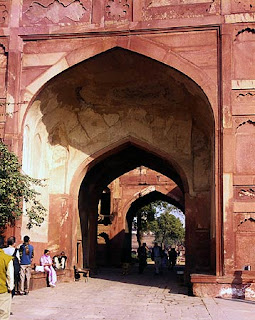
In 1638 Shah Jahan moved his capital to the Red Fort at Delhi, though it took a further 9 years for the palace complex there to be completed. He ruled from here until he became very sick in 1658, precipitating a succession battle amongst his sons which was won by Aurangzeb his third son (who became first by killing his brothers).
Poor old Shah Jahan recovered, but too late to keep his throne, and he spent the last eight years of his life locked up in the Red Fort at Agra, only being able to glimpse the Taj Mahal in the distance through the river mists. His tomb is there, however, unsymmetrically placed next to that of the his wife - the great love of his life - because his own black marble Taj was never built!
The Red Fort at Agra (a couple of Ks from the Taj Mahal)The Emperor's Great Durbar Hall in the Red Fort at Agra

Aurangzeb 1618 - 1658 - 1707

Aurangzeb was an intolerant religious (Muslim) zealot and kill-joy. He forbade music, put a stop to Mughal painting and left behind none of the architectural wonders that earlier members of his dynasty had produced.
The Hindus and Sikhs fared even worse, with suppression, destruction of temples, the reintroduction of a poll tax and public executions.
Just a generally unpleasant little man as far as most of the population were concerned, and it is not surprising that his 50 year reign was the beginning of the end for the Mughal dynasty.


This photo of the Badshahi Mosque in Lahore was taken by Grandmother Paradox in 1922. The mosque, also known as The Emperor's Mosque, was built by Aurangzeb and completed in 1673. Grandmother had been told that it was Jahangir's Tomb, which it is how it is titled in her little photo album and how we originally described it here.In 1739, India was invaded by the legendary Iranian soldier Nadir Shah. Despite having superior numbers, the Mughal forces were defeated by the Persians. Later, after an attempt was made on Nadir Shah's life, the Persian forces retaliated with a bloody vengeance and sacked Delhi in the style of the Venetian led 4th Crusade's sack of Constantinople 500 years earlier in 1203. Amongst the loot they took was the famous Peacock Throne of Shah Jahan.

In 1756 the Nawab of Bengal, aged 27 and wanting to register his dislike of British administration, captured Calcutta from the British East India Company. Amongst other things he thoughtlessly imprisoned 146 Brits in a 20' square airless cellar, and by the next morning all but 23 were dead and the "Black Hole of Calcutta" had sealed the fates of the Nawab and indeed India.

Robert Clive's forces beat the Nawab decisively at the Battle of Plassey the next year (June 23 1757), and Clive became the first British Governor of Bengal. Actually the so called (and famous) "battle" lasted only a couple of hours, if that, as large numbers of the Nawab's soldiers had previously been bribed to throw away their weapons and surrender prematurely.

Jawaharlal Nehru, in "The Discovery of India" (1946), pointedly describes Clive as having won the battle "by promoting treason and forgery", and notes that British rule in India had "an unsavoury beginning and something of that bitter taste has clung to it ever since."

Another commentator states that "Clive thought of the battle as the climax to his career, a striking testimony to the extraordinary shallowness of his character ..... but in one fundamental respect, the battle of Plassey signified the state of things to come: few British victories were achieved without the use of bribes, and few promises made by the British were ever kept."
Anyway, after this the already fracturing Mughal Empire started to crumble, and before too long was reduced to a symbolic presence in Northern India until, 100 years after Plassey and in the wake of the Indian Mutiny, the British took over everything and the last Mughal Emperor (Bahadur Shah Zafar II (1775 - 1862 (87)) (below - portrait c1854 in Lahore Fort - taken from the excellent book "The Last Mughal" by William Dalrymple), hiding in Humayun's tomb in Delhi, was run to earth by Lieutenant Hodson.

Tuesday, November 11, 2008

OBAMA'S EARLIEST MEMORIES

Democratic senator Barack Obama has been elected the first black president of the United States. "It's been a long time coming, but tonight... change has come to America," the president-elect told a jubilant crowd at a park in Chicago.

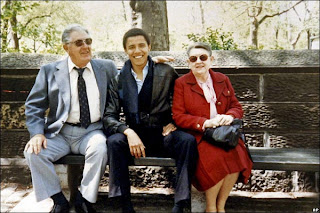
The son of a Kenyan man, Barack Obama Senior, and a white woman, Ann Dunham, from Kansas, Mr Obama was born on 4 August 1961 in Hawaii.
When Mr Obama was a young child, his father had the chance to study at Harvard but there was no money for the family to accompany him. Mr Obama Senior later returned to Kenya alone, where he worked as a government economist, and the couple divorced.
When Mr Obama was six, his mother married Lolo Soetoro, an Indonesian, and the family moved to Jakarta.
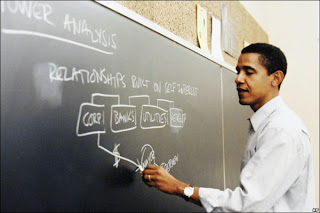
Eventually Mr Obama moved back to Hawaii to live with his grandparents and attend school. He went on to study political science at Columbia University in New York, and then moved to Chicago where he spent three years as a community organiser.
In 1988 he left to attend Harvard Law School, where he became the first African-American president of the Harvard Law Review.
He married Michelle Robinson, a fellow Harvard Law School graduate, in 1992 and they now have two young daughters, Malia and Sasha.
After Harvard, Mr Obama returned to Chicago to practise civil rights law, representing victims of housing and employment discrimination. He served in the Illinois state senate from 1996 to 2004.
It was in 2004 that he first shot to national - and international - prominence with a speech that stirred the Democratic national convention.
After his US Senate election victory in Illinois a few months later, he became a media darling and one of the most visible figures in Washington, with two best-selling books to his name.
The senator attended the Trinity United Church of Christ in Chicago for almost two decades, but broke away from it in May 2008 after controversial sermons by Trinity preachers hit the headlines.
Mr Obama clinched the Democratic nomination following a battle against former first lady Hillary Clinton - a contest that gripped the US from January to June 2008. Speaking after it became clear that he had won, Mr Obama talked of a "defining moment for our nation".

Mr Obama broke all records for fundraising during his campaign by using the internet to collect huge numbers of small donations. He has also demonstrated the ability to attract crowds of more than 100,000 people to his rallies.On the eve of the election Mr Obama's grandmother, Madelyn Dunham, died. He had referred to her in some of his most powerful campaign speeches. Mr Obama said: "She was a woman of extraordinary accomplishment, strength, and humility."

In victory Obama said: "If there is anyone out there who still doubts that America is a place where all things are possible, who still wonders if the dream of our founders is alive in our time, who still questions the power of our democracy, tonight is your answer."He added: "The road ahead will be long. Our climb will be steep. But America - I have never been more hopeful than I am tonight that we will get there."

Obamamania and Pakistan

There is no doubt that Barack Obama's resounding victory in the US presidential election is a major watershed in the US political evolution. The election of an Afro-American to the highest office of the land speaks volumes about the political maturity of its people in overcoming the prejudices of race and colour which had once bedeviled the American society. Obama's victory thus marks a clear break from the past and opens new vistas of freedom and opportunity for the American people. They can take pride justly in this milestone in the forward march of the US history.
Looked at from another angle, Obama's victory constitutes an emphatic rejection of President Bush's flawed internal and external policies which have shaken the US economy and involved it in endless wars abroad. Besides, the US under President Bush has been guilty of grave human rights violations in the treatment of enemy combatants and non-combatants as reflected by Abu Ghraib, Guantanamo and the stories of forced renditions and torture. The doctrine of unilateral preemptive intervention as propounded by President Bush and applied in Iraq alienated the US allies and friends besides weakening the UN and multilateralism. All in all, the Bush administration's misconceived security policies through the over-emphasis on the use of force over diplomacy, hard power over the soft power and unilateralism over multilateralism have served to increase hostility towards the US and aggravate the threats to its security.
The results of the US presidential and congressional elections have brought home the resilience of the American people and the self-correcting mechanism which is the hallmark of their political system. As the prestigious weekly, The Economist, recently commented, "In choosing him (Obama), America has shown once again its unrivalled capacity to renew itself, and to surprise."The starting point of the US foreign policy under President Obama would be the recognition of the fact that despite the huge size of its economy and its enormous military strength, the US alone cannot tackle successfully the grave security threats and the difficult economic problems confronting it. In an article entitled Renewing American Leadership in the Foreign Affairs issue of July-August, 2007, Obama observed, "America cannot meet the threats of this century alone, and the world cannot meet them without America. We can neither retreat from the world nor try to bully it into submission. We must lead the world, by deed and by example....The mission of the United States is to provide global leadership grounded in the understanding that the world shares a common security and a common humanity."Consequently, in contrast with the policies pursued by the Bush administration, the Obama presidency will witness increased emphasis on multilateralism and greater attention to the views of allies and friends in grappling with the great issues of our times, be they terrorism, nuclear proliferation, climate change, or the transition from a unipolar to a multipolar world. The US under President Obama is also likely to place greater reliance on diplomacy in dealing with serious security issues while keeping the use of force as the option of the last resort in a major departure from the "cowboy foreign policy" which has been pursued by Washington under President Bush.Inevitably, the current US economic and financial crises because of their enormity will absorb a great deal of the time and energy of the Obama administration. While major new domestic initiatives will be required in the US to overcome these crises, global interdependence will dictate close cooperation with other major powers for the purpose. China because of its fast growing economy, the prospect of its GDP at PPP exceeding that of the US by the year 2030 and its colossal foreign exchange reserves amounting to US$1.9 trillion will play an increasingly important role in these international deliberations. These economic compulsions will not only lead to the restructuring of the international financial institutions like the IMF but also to important changes in the way the US deals with the grave security issues of the 21st century.

The Obama administration will accord a higher priority to environmental issues such as global warming than was the case under the Bush presidency. In the above quoted Foreign Affairs article, Obama wrote, "As the world's largest producer of green-house gases, America has the responsibility to lead. While many of our industrial partners are working hard to reduce their emissions, we are increasing ours at a steady clip - by more than ten percent per decade."Finally, it appears from Obama's views expressed so far that a major aim of the US foreign policy under him would be to "strengthen our common security by investing in our common humanity." The United States can, therefore, be expected to allocate increased resources to development assistance and to help build up democratic institutions abroad like strong legislatures and independent judiciaries.What do these changes portend for Pakistan and its foreign policy? Terrorism will remain a high priority issue under President Obama. While Obama may succeed in his promise of withdrawing the US combat forces from Iraq by May 2010, he is likely to pay increased attention to Afghanistan and Pakistan in combating global terrorism. Obama declared previously his intention to hit Al-Qaeda targets in Pakistan's tribal areas if we are unwilling or unable to do so. However, his recent pronouncements on the subject have been more nuanced.It appears that the Obama administration would maintain pressure on Pakistan to do more. But it would also place increased emphasis on strengthening the effectiveness of the Afghan government which is seen by him as being responsible for most of Afghanistan's problems according to a recent interview given by him to MSNBC. This would leave a great deal of room for skilful diplomacy on the part of Pakistan to work out a joint strategy with the US in combating terrorism based on targeting Al-Qaeda elements, engaging moderate Taliban to isolate the extremists both in FATA and Afghanistan, paying increased attention to economic development as an essential element in the counter-terrorism strategy, and realising a new political dispensation in Afghanistan which gives the Pashtuns and the moderate Taliban their due share in the power structure in that country.Bilaterally, the Obama administration will extend increased support to the strengthening of the democratic institutions in Pakistan and enhance substantially the economic assistance to Islamabad relative to the military aid. The bill in the US Congress for raising the development assistance to Pakistan to US$1.5 billion per annum over a ten-year period, proposed by Vice President-elect Joe Biden, would obviously receive the full support of the Obama administration. Needless to add that our success in overcoming our current economic crisis and putting the country on a long-term high growth trajectory would depend more on our ability to adopt the requisite corrective measures domestically rather than on any assistance that we may receive from foreign sources.Pakistan's strategic location at the crossroads of South Asia, West Asia and Central Asia will continue to impart special importance to it from the point of view of the Obama administration. The same will be true of the way we manage our relations with India, China, Iran, Central Asian Republics and Russia. It will be a measure of the success of our diplomacy if we can manage the complexity of these relations in such a manner as would promote our essential security and economic interests, and strengthen our friendly relations with the important countries in our neighbourhood, especially China, Iran and Afghanistan, while strengthening our friendship and cooperation with the US. The tight-rope diplomacy required for the success of this manoeuvre will test severely the skills of our leadership and diplomats.India will remain the centre-piece of the US strategy for Asia under President Obama. Therefore, while one must welcome Obama's statements calling for a settlement of the Kashmir dispute, it is doubtful that his administration would bring to bear sufficient pressure on India to show the requisite flexibility for the purpose.

The writer is a retired ambassador ...E-mail: javid.husain@gmail.com

Tuesday, November 4, 2008

Pakistan is crucial to world map

Some pseudo-intellectuals are bumming around the world trashing Pakistan and the heavily skewed media is awash with reports making a dark portrayal of the future of this land of the pure. Rumours are doing rounds that Pakistan will be dismantled or erased from the world map, it will be balkanised or fragmented into multiple pieces and that it will be divested of its nuclear capability by the US-led West in collaboration with certain anti-Pakistan powers by and by. All this has made for a general feeling of doom and gloom in Pakistan.
If we have a going-over of the case, what stands out a mile is that all these reports and rumours are highly asinine and nothing short of being hogwash. Pakistan has born to survive and it is destined to be an invaluable part of the world map for keeps. On having mature reflection, two factors come to the fore as prime guarantors of the survival of Pakistan on the world map: To start with, Pakistan has got a valiant and highly-octane military which is quick off the mark and has got peerless chutzpah to insulate the country against external aggression. General Kayani has rose to the occasion and provided the much needed leadership and sense of direction to his people at one of the most difficult times in the nation's history by sending a shot across America's bows. Pakistan's army will make mincemeat of anyone who tried to undo the sovereignty of this country. Moreover, Pakistan possesses nuclear weapons and it is no stranger to unpleasant situations. It has already fought three conventional wars with another nuclear nation next door.The other most important factor is the geopolitical importance of Pakistan which acts as a bulwark against malicious and venomous designs. Being in the box-seat geopolitically, Pakistan holds all the aces and catches the sight of influential foreign powers. Several foreign powers are always keen on the sustenance of Pakistan and will definitely go an extra mile to support it in its bid for survival against the heinous motives of some other powers. This can be discussed on the following counts;Firstly Pakistan is located at the junction of great powers. The near future is going to be pregnant not only with the traditional rivalries of US and Russia but also an endless struggle between them for supremacy in regional and global politics. In such situation, the world will not only see the conflict of interests between US and Russia but also efforts by them to make as many friends as possible to solidify their position. And Pakistan will be the pivot of attraction for both powers.Secondly, Pakistan is located in close proximity to the oil rich ME countries and it can influence the shipment of oil. The icing on the cake is that it lies adjacent to the Indian Ocean, Persian Gulf and Arabian Sea. It is going to be a major player in the Central Asia geo-political game. A major geographic issue will be decisive here: both Tajikistan and Uzbekistan lack any sea access. Consequently Pakistani harbours on the Indian Ocean could function as outlets for the new Central Asian energy routes - a major stake which piques the interests of not only China and Russia but also of western powers. The US has entered Afghanistan to occupy the energy resources of Central Asia and Pakistan is well-positioned geographically to emerge as a commercial hub for land-locked Central Asia and beyond. Pakistan's seaports are equidistant from Europe and the Far East.The most vivid proof of Pakistan's geo-political importance can be gauged from the fact that it is US and NATO's trustworthy ally in the fight against terrorism. Pakistan's co-operation is critical to all US plans. The incontrovertible truth is that war against Al-Qaeda can be won only if Pakistan cooperates with NATO-ISAF forces. This is because Pakistan provides logistical support to the US in the form of fuel and ammunitions. If Pakistan ditches America at this stage in the War On Terror and closes the border to all NATO supply to Afghanistan, its enterprise in Afghanistan will be doomed to failure and it will meet a fate worse than death.Pakistan is a country whose future determines the success or failure of the whole of the region. In the mid-nineties, Yale historian Paul Kennedy called Pakistan one of the most pivotal states of the world. America thinks of India as a strategic partner for maintaining balance of power against China but Pakistan is a key to the stability of the whole world. It is central to making short work of new threats to the world. Time and again, the West has turned its back on Pakistan. This blunder should not be made again or else it may occasion horrendous consequences.

The moment of truth

November 4 is going to experience the fight for the most covetous and powerful job on the face of the earth, as on this day Americans will plump for the man who will rule them and keep the American flag flying for the next four years. As the upshot of the US election exercises cosmic and far-reaching impact on the planet as a whole, so the unfolding of the entire election process piques the curiosity and interest of the people across the globe.The US election process stands out as being the most peculiar and arduous one in the world. Its trademark is that first candidacies are declared sometimes three years before the vacancy in the White House becomes due. This process entails hard-fought battle as a good part of time of the campaign is spent on fund-raising, since the initial viability of a candidacy is established by the dollars raised rather than any votes won.
Some candidates get knocked out before a single vote is cast, if they lag behind in the public opinion polls that prospective donors read. Another factor that flag up the otherness of the US election is that even Election Day does not bring the curtains down on the electoral process. The victor is only certified when the Electoral College meets on December 15, on the basis of the votes cast in each state in November, to formally elect the president of the United States.November 4 election will see Obama pitted against McCain. Obama is an athletic 47 and his oracy is noteworthy. People turn up in his rallies agogo as he stirs their passions and his eloquence does not leave a dry eye in the house. He comes at the policy questions with a delightful mix of intellect and pragmatism. His partisans get their jollies out of his capacity to size up the situation with aplomb and pick solutions that seem both sober and politically workable.He has got a big wish list: he would pull out troops from Iraq with dispatch and send more troops to Afghanistan; he would close the prison at Guantanamo Bay of which the people across the world have been highly disdainful and dismissive; he would work out the prevalent economic meltdown sensibly and bottom out the situation etc. The alternative candidate is McCain.
McCain, a war hero who endured years of torture in Vietnam, is not on a par with Obama both in intelligence and oratorical skills. The odds are also stacked against him respecting age. He would be the oldest first-term president if elected and he has had recurrent boots of cancer. He has a fiery temper and is a warmonger at worst. He is at best a prickly individual with neo-conservative tendencies who will do little to build bridges with the world at large. He has hawkish stands on Russia, Iraq and just about everything else. His grasp of economics and finance is also shaky and tenuous.Undoubtedly, it is the military-industrial complex comprising of arms companies and oil corporations in the US which determines the direction of the policies to be followed by the White House as it has the moxie enough to browbeat any president into submission but be that it may, the personality of the president reflects itself in multiple ways on various fronts. So let us have a brief run-down on how the US will look under Obama or McCain.If Americans will opt for Obama as president, it will achieve racial reconciliation in the US. His election will also help the US to mend fences with the rest of world, as he gives countenance to international cooperation and not aggression. Some people try to confute this point by quoting his inflammatory remarks against Pakistan during the campaign. This is all wet. The point of fact is that this is mere political jugglery to outwit his opponents and so should not be taken seriously. Obama, after getting sworn in, will think better of it and will not go for an attack on Pakistan as Pakistan has all along been the trust - worthy ally of US. How Obama can attack Pakistan when he has declaimed about talking even to Iran and Syria.Deep down, he is a pacifist. What goes more than halfway to prove this is that he had opposed the Iraq War from the word go. His surname is African, his middle name is Arabic, he has Muslim ancestry, he grew up partly in Asia and his skin colour is close to the global average. He finds himself at ease with other cultures.The evidence giving credence to this point is his trip to Asia in 1981. With a Pakistani college roommate, Muhammad Hassan Chandoo, he travelled around South Asia. During the trip, he found himself overwhelmed by Karachi. Obama says, "part of the most memorable portion of the trip was travelling to a more provincial area outside of Karachi, seeing what was essentially a feudal life."Contrarily, electing McCain will lead a lot of people of colour around the world to see Americans as more fundamentally racist than they pretend to be. McCain will also add insult to injury in the relations with other countries of the world as he is a tough-talking guy who visualises the US crossing swords with formidable foes and confronting them. He wants to keep the battle going in Iraq, speaks of bombing Iran and intends to pursue a tough foreign policy with reference to North Korea. He also wants to leave Russia out in the cold and humiliate China on various fronts. His visceral attitude and mercurial temperament will make the matters take a turn for the worse. To put it mildly, McCain is the wrong man for the White House at this critical juncture.The biracial and Hawaii - born Obama's candour and judicious quality of decision making should win him the White House. However, it is the Americans who will make a choice. But they need to think long and hard before exercising their right of franchise.

Monday, October 27, 2008

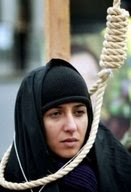
No justification for honour killing

THE issue of honour killing has come to the fore yet again in human rights discourse. While the practice is not confined to any particular country or region, much attention has been focused on Muslim countries such as Pakistan, Jordan, Turkey, Palestine, Syria, Egypt and Morocco, where the crime appears to be on the rise.
The spotlight on honour killing in Muslim countries has made many Muslims in the West acutely uncomfortable and generated a reaction of anger and defensiveness. Given the widespread negative stereotyping of Islam and Muslims, this reaction is understandable. However, it is very important to point out both to Muslims and non-Muslims who think that honour killing can be legitimised by reference to Islam, that there is absolutely no justification for it in our faith.The Quran – the highest source of authority in Islam – puts so much value on the life of a human being that it likens the killing of one person to the killing of entire humanity. “…if anyone slays a human being – unless it be (in punishment) for murder or for spreading corruption on earth – it shall be as though he had slain all humankind; whereas if anyone saves a life, it shall be as though he had saved the lives of all humankind.” (Surah 5: 32)It is well known that most victims of honour killing are accused wrongly and murdered on little or no evidence. All too often, the horrendous crime is sought to be legitimised with reference to a value system which claims to be Islamic. The Quran which is extremely protective of the rights of disadvantaged human beings is particularly concerned about protecting the rights and lives of women who are accused of dishonourable acts, as the following verses show:“And as for those who accuse chaste women (of adultery), and then are unable to produce four witnesses (in support of their accusation), flog them with 80 stripes; and ever after refuse to accept from them any testimony -- since it is they, they that are truly depraved” (Surah 24: 5) “…And for those who accuse their own wives (of adultery), but have no witnesses except themselves, let each of these (accusers) call God four times to witness that he is indeed telling the truth, and the fifth time, that God’s curse be upon him if he is telling a lie. But (as for the wife, all) chastisement shall be averted from her by her calling God four times to witness that he is indeed telling a lie, and the fifth (time), that God’s curse be upon her if he is telling the truth” (Surah 24: 6-8)The Quran makes it mandatory upon all believers that they respect the sanctity of life; that they stand up for justice and that they testify to the truth. It also makes it obligatory for the Muslim community to protect those who witness to the truth. Those who deny that honour killings are taking place, or that highlighting them is tantamount to Islam-bashing, need to be mindful of the Quranic verses such as the following:“You who have attained faith! Be ever steadfast in upholding equity, bearing witness to the truth for the sake of God, even though it be against your own selves or your parents and kinsfolk. Whether the person concerned be rich or poor, God’s claim takes precedence over (the claims of) either of them. Do not, then, follow your own desires, lest you swerve from justice: for if you distort (the truth), behold, God is indeed aware of all that you do.” (Surah 4: 135)“Behold, God enjoins justice, and the doing of good and generosity towards (one’s) fellow-beings; and God forbids all that is shameful and all that runs counter to reason, and is envy; (and) God exhorts you (repeatedly) so that you might bear (all this) in mind.” Surah 16: 90). “And cover not truth with falsehood, nor conceal the truth when you know (what it is).” (Surah 2: 42) “…And let (not a) witness suffer harm. If you do (such harm) it would be wickedness in you.” (Surah 2: 282)
The writer is a scholar of Iqbal and Islam, teaching at the University of Louisville, US.

Post-modernism and Islam

WHAT is the relation between Islam and post-modernism? Earlier, we used to talk of Islam and modernism and now we talk of Islam and post-modernism.First let us understand the difference between modernism and post-modernism. Modernism which ruled the roost until the early 1950s was characterised by a hegemony of reason. Modernism rejected anything which was not in conformity with reason.Modernism was, in a way, quite intolerant of forces of tradition or even anything supra-rational, let alone irrational. It was for this reason that Freud’s theory of the subconscious or unconscious was also ridiculed by modernists. It was not deemed to be in conformity with reason. Even Marxists also rejected Freud and his explanation of deeper sources of human behaviour. Naturally they also rejected religion as something irrational. Thus, modernism was as intolerant of anything non-modern as one religion is said to be of another.Europe throughout the 19th century was characterised by modernism and Asia and Africa were looked down upon by the Europeans as anti-modern and irrational. Thus, the 19th century was the century of modernism and of European hegemony. It was in the early 1950s and ’60s that new trends began to emerge and post-modernism began to be theorised by academics and social scientists.In post-modernism, reason lost its hegemony and supra-rational forces came to be accepted. Post-modernism is mainly characterised by pluralism, be it cultural, religious or literary sphere. Europe and North America became multi-cultural and multi-religious societies due to the migration of people from the western powers’ former African and Asian colonies.Also, it was during this phase that religion also found a respectable place again in western society. In other words, religion came to be re-appropriated. Thus, post-modernism, unlike modernism, is not hegemonic and is tolerant of other cultures; its main characteristic is pluralism. Now let us explore the relation between Islam and post-modernism.Islam believes in religious and cultural pluralism, and while accepting importance of reason it also accepts supra-rational forces. According to the Quran, Allah has created several religions and cultures though he could have created only one, if He so desired. (5:48). Thus, pluralism is the very basic to the Quran.According to the Quran the world has been created in its plurality, not only in matters of religion but also by way of ethnicity, nations and tribes. These have been described as signs of Allah (30:22). About national and tribal plurality, one only need see Surah 49, verse 13.The Quran stresses pluralism to such an extent that even when one is convinced that others’ gods are false, it stops believers from abusing them. The Quran says, “And abuse not those whom they call upon besides Allah, lest, exceeding the limits they abuse Allah through ignorance.” Further, it says: “Thus to every people have. We made their deeds fair-seeming…” (6:109)Here, it is a Quranic injunction not to say bad words about others’ religion(s) because to every people their religion looks true and valid. The Quran even says that in every place of worship Allah is remembered and hence it should be respected. Thus, the Quran says, “And if Allah did not repel some people by others, cloisters and churches and synagogues and mosques in which Allah’s name is much remembered, would have been pulled down.” (22:40).Thus, there is no place for inter-religious conflict in Islam. The Quran also subscribes to the doctrine of what Shah Waliullah and Maulana Azad called the wahdat-i-Deen i.e., unity of religion, which means all religions are same in essence and in their core teachings. Both the eminent theologians have thrown detailed light on this question in their respective writings.As far as multi-culturalism is concerned, the West accepted it only in the latter part of the 20th century. The West had otherwise long been a mono-religious and mono-cultural society, because the Christian church had rejected validity of all other religions except Christianity. The church now of course believes in inter-religious dialogue and has issued instructions to Christian organisations to that effect. The Quran had accepted all Biblical prophets during the revelation itself.Islam accepted multi-culturalism too by saying that all believers are one Ummah regardless of their ethnicity, language, tribe or nationality. It also admonished believers not to discriminate between Arabs and non-Arabs, as Arabs were very proud of their ethnic origin. Islam spread far and wide among peoples of different cultures and even the Shariah respected the ‘adat (customs) of different people. Local customs and traditions were integrated with Shariah formulations from the earliest time.Thus, it will be seen that Islamic teachings anticipated what came to be called post-modernism today. The most essential thing is tolerance for diversity and for those who are different from us. Being different should not mean being inferior, superior or hostile to the other. We must project Islam in the right spirit, emphasising the practice of tolerance it so ardently advocates to the faithful.
The writer is an Islamic scholar and heads the Centre for Study of Society and Secularism, Mumbai.

Saturday, October 25, 2008

Ijtihad

President of Pakistan is spot on when he says that War On Terror is now Pakistan's war. We do not need threats of attack from US presidential candidate, Barack Obama, because we know that Pakistan is the victim and not perpetuator of terrorism and it is Pakistanis and Pakistanis alone, who have to deal with this matter to save our beloved country.Our policy in this regard, as I often repeated, has to be tailor made to suit our own peculiar circumstances and cannot be dictated by others. Use of force has to be the last resort, must be tempered with dialogue and the strategy has to focus on eliminating breeding grounds for recruitment of terrorists by providing better living opportunities and conditions to people, due education, adaptation of madarssa system with western education and ready access and availability of justice.It is indeed a landmark, not only in terms of strengthening parliamentary democracy, but also in the fight against terrorism that the armed forces are making in camera debriefing to parliamentarians. It is hoped that Parliament as a collective body can now set aside their inherent political differences and party politics and agree on the overall terrorism combating strategy on the basis of a democratic and collective decision.To me one of the major factors of rise in terrorism across the world is the ascendancy of the influence of a large body of intellectuals, also called warriors, who believe that West and Islam are enemies and that a clash between the two is inevitable hence in order to save the west the enemy must be destroyed. People like Bernard Louis, Daniel Pipes, Krawter Kramer and Samuel Huntington urge US to confront Islam now and contain it militarily. The second major reason is admittedly and an inherent fault with Muslim societies including Pakistan in failing to carry out an internal reform and giving up the concept of Ijtihad.On the other hand the majority are of the view that both worlds need to understand and reconcile with each other and if only US and West play a more just role in world politics and impartially resolve issues like those of Palestinians, Kashmiris, Chechens and ratify the wrongs of the past like invasions of Iraq and Afghanistan, apologise for allowing atrocities in places like Bosnia, collaborate with Muslim populations rather than their rulers, particularly in economic and educational fields and promote democracy, then the so-called "clash" can be avoided.It is correctly pointed out that after all it was in the days of Islamic Empire that principles of tolerance and living with harmony with all cultures and religions were established. All this may be very true but the fact of the matter remains that the warriors have much more political and media clout in the world and hence the gap between the western and Muslim worlds continues to grow.It is a sad fact however that all is not only the fault of West alone. One key factor which contributes, in my opinion, in a very negative way is not only creating more misunderstanding between the two worlds, but also within the Muslim community itself, is the confusion and lack of clarity on most issues that are modern and relevant to today's age. Muslim societies are in a state of mystification and hence it is difficult not only to build that essential understanding between the two communities, but also as a result of lack of clear guidance, there is ample opportunity for ill-motivated and the wrong kind of people to easily brainwash segments of the society and make them commit acts of terrorism against mankind, all in the name of Islam.One of the most overlooked areas of activity that can play a major role not only in building bridges between Muslim and Western worlds but which is an essential factor for enabling Pakistan to effectively work against terrorism is to carry out Ijtihad of a grand scale within the Muslim community.Ijtihad is the intellectual endeavour to seek solutions of day-to-day matters and in the context of Islamic law, an attempt to interpret sacred tax of Quran and Sunnah and apply them to day-to-day working, akin to the concept of Jihad (physical struggle against aggression) and is the fourth source of commands of Islam.When Muaz Bin Jabal was going to Yemen as Hakim, Prophet Muhammad (PBUH) asked him how he will make his decisions: "by the book of God," Jabal replied. The Prophet (PBUH) asked him how will you judge if you don't find the concerned matter there. He replied, "By traditions of the Prophet." Prophet Muhammad (PBUH) then asked him and if you don't find it there. Jabal replied, "Then I will judge by Ijtihad (by my own understanding)." Upon this Prophet Muhammad (PBUH) praised Allah and showed his appreciation for Muaz. This established the basis of Ijtihad in Islam.
Clearly under this concept one cannot make new laws contrary to what is in the Holy Quran but at the same time there is no prohibition and in fact only encouragement for innovation and reinterpretation. One of the key reasons for Islamic societies' rise to power was this development of the civilisation through reasoning and a major cause for the fall from great heights was when Muslim societies closed the gates of Ijtihad.Ijtihad fell out of practice mainly due to the efforts of the Ashrite Theologians from the 12th century who saw it as "leading to errors of over confidence in judgements" since the time of Al-Ghazali. In the words of Joseph Schacht, Professor of Islamics at Columbia University, New York: "A consensus gradually established itself to the effect that from that time onwards no one could be deemed to have the necessary qualifications for independent reasoning in religious law, and that all future activity would have to be confined to the explanation, application, and, at the most, interpretation of the doctrine as it had been laid down once and for all."The decline in Islamic societies was of course augmented by the concept that science, reasoning, poetry, architecture and other educational pursuits were necessarily anti-Islamic. Progress began to be viewed as something contrary to Islam.Over time practices and procedures unconnected with Islam started acquiring status equivalent to principles of Islam and the lack of education, in particular the lack of discussion on issues, led to different anti-Islamic practices being followed by Muslim societies all over the world. Take the example of Pakistan, honour killings and traditions like Vani have acquired almost religious sanctity. As a result of confusions even dealings with the West are considered and believed by many to be contrary to the principles of Islam.It is therefore extremely necessary to go back to the drawing board and differentiate between the behaviour that Islam propagates and practices followed by some Muslims. It is correctly said, "Every human being views things differently and differences get resolved through discourse. If there is only one interpretation, it results in dictatorship, dogmatism and monism. Divergence is in fact a mercy from God."There is immense room for Muslims to interpret the Holy Quran and apply it on different situations. Tis surely is the right way to ensure that Islam and Muslim communities reform with the times in a positive way which augments rather than diminishes the spirit of Islam. Clearly modernity does not mean adopting Western culture and habits but what is proposed is adoption of same spirit of enquiry and zest for knowledge.It is correctly said that Ijtihad is about "freedom of thought, rational thinking and the quest for truth through an epistemology covering science, rationalism, human experience, critical thinking and so on."It is time to allow Ibn-e-Sina, Ibn-e-Rushad, Al-Farabi, Al-Baruni and Al-Haytham, scientists, philosophers and jurists of Islam's golden age to be allowed to work with freedom and revive, revitalise and restore Islamic civilisation. According to Mr M A M Khan, "Islamic modernists have been trying, since the time of Sir Syed Ahmad Khan, the great Muslim reformer of the 19th century, to re-instill a sense of the value of knowledge and an appreciation for science and philosophical inquiry. There is no research institution worthy of recognition in this way in the entire Muslim world."Muslims must learn that science and religion can be bridged and that Islam has nothing to fear from reason and therefore Ijtihad is the only option which will open the hearts and minds of the Muslims. According to Ibn Khaldun, the great 14th century Arab historian and philosopher, "Ijtihad indeed is the engine of civilisation." Mr M.A.M. Khan in his theory has also puts it well that "Islamic reformation can be understood into two different ways. It can mean a reform of society to bring it back to what have been considered Islamic norms and values...the other reform strategy is to question the existing understanding of Muslims and seek to articulate a reformed understanding...."With these two kinds of Islamic reforms it is clear that Muslims can indeed modernise without in any manner "de-Islamising" or losing their traditions and cultures. Indeed culture and Islam are distinguishable and Muslim societies will retain their Islamic essence and can reform "dysfunctional cultural habits that hinder development, progress, equality and prosperity." The challenges for Muslims today are to adopt whole-heartedly the concepts of "democracy, modernity and globalisation" without cutting the "umbilical cord to the heavens."
Indeed the Holy Quran's principles of consultation add to the democratic traditions of the Islamic world.The western warriors have at least in the case of Pakistan been proved wrong when they said that democracy and Islam are incompatible. Let Pakistan now be the first one to go back to the drawing board and carry out the exercise of Ijtihad and become the beacon light for the Muslim Ummah. Let us prove to the world that Islam is not about the three Ss. It is not "stayed, stale or static." Indeed Ijtihad is the method through which the gap between message and meaning is closed. Indeed it is only through this method of Ijtihad that the gap between message and meaning in today's world can be closed.

Saturday, October 4, 2008

Terrorism and SAARC

Despite poor progress pertaining to burning issues, the SAARC Conferences can boast of indiscriminate use of hyperbolic expressions, generally, by all and sundry. The final declarations tend to be well-worded but bathetic. More often a wish list adorns such official communiqués instead of a course of action developed on the basis of a consensus. Such dramatic utterances with nothing to stand on undermine the status/ credibility of the organization. However all members appear reconciled to holding such exercises, perhaps, as a tribute to Don Quixote' adventures. The biannual Conference of the SAARC chiefs of Police on cooperation held in Islamabad in mid-April this year was no exception. Putting paper over cracks in inter-state relations in the region, diplomatic homilies were, generally, used. The Secretary General SAARC, an officer of the Indian Foreign Service, sounded truly diplomatic. However, the others too, reportedly, kept up the façade as usual. Amid high-sounding statements etc on terrorism etc, the end-result looked a Whimper.

Colombo hosted 15th SAARC summit on Aug 2-3 which again projected terrorism as the dominant agenda. Karzai started the blame-game which sidelined the real issue of cooperation. The final declaration called "Partnership for Growth of Our People" stressed the leaders' commitment to upgrading the "legal regime against terrorism" under the auspices of International conventions etc on the subject as well as the SAARC-specific protocols signed by all the members.All regional alliances tend to capitalize on shared interests of the members to promote collaboration for the realization of peaceful coexistence, upgradation of economic benefits and harmonious policy-making for facilitating fair social surge in the region. Such a mandate presupposes certain equality among members. The working-arrangements benefit greatly if there are no festering inter-state disputes. In such an environment, a consensus on major issues can be worked out, generally, acting in good faith.SAARC appears to suffer from many handicaps. First, India has satellites like Bhutan, Sikkim as members while even Bangladesh and Sri Lanka have serious problem-areas with her. Second, in such a setting India tends to be calling the shots all the time. The only member which can question such mode is Pakistan. Third, Indo-Pak relations are marred by the Kashmir dispute which casts a spell on most interaction. Fourth, the problem in Afghanistan draws different reactions in India and Pakistan. While the Karzai regime catches at any straw including Indian-support to keep US Administration in good humour, Pashtuns resent the same. India is trying to create a foothold in this country for fulfilling strategic designs of her own and the US. She also hopes to benefit from the Central Asian trade ultimately. By such posturing it also tries to impress the US, now its principal ally in this area.Pakistan shares a border, unlike India, with Afghanistan. Historically it has remained a porous border like the one between US and Mexico. On both sides of the border, Pashtun tribes live. Though physically divided yet they share relationships, culture and religion. Such a disposition was exploited by the CIA in the 80' to bolster the war against the Soviet 'occupation' of Afghanistan. The local as well as foreign volunteers were smuggled conveniently in to the battle-zones with great consistency by US/Pakistani agencies.Now the wheel has come back a full circle. The Pashtuns, who form the biggest majority in Afghanistan, are, generally, up in arms against the 'occupation' of their country with the complicity of the warlords from the North. A surrogate regime under Pashtun Karzai is supposed to run the country but all reports indicate that its ambit is Kabul. While the South/East remains under the influence of the Taliban, the rest of the country is run like small fiefdoms by the accomplices of the Kabul-regime. To ingratiate the warlords, the foreign forces had to look the other way at the fantastic growth of opium in Afghanistan in the last 4 years. It was started by the greed of the Northerners and the South also started chipping in for its 'survival'. Even the Karzai Govt concedes that opium etc are earning the country about $ 4 Billion every year as the demand for the drugs remains high in US, Russia, EU etc. Taliban are reported to be getting a share out of such earnings by providing security to such operations in the Pashtun area. As such this makes their lifeline.As Pakistan has been suffering from acts of terrorism by the extremists, it had demanded that the border may be walled like in Berlin of Soviet days. This has implications which can only be overridden by the consideration for winning the 'war on terror'. However, finally this was not agreed to by the parties concerned. Now about 80,000 troops are trying to seal all movement across the border. The cost to the forces is high as the topography defeats operational capability of the troops.The progress of the 'war on terror' appears to be dismal except for its political utility. Too many reports indicate how the issue has been used to mislead public opinion, particularly in the US. Looking back one finds a far more peaceful Near-East/ South Asia immediately after the Taliban were bundled out of Kabul on the charge of complicity with OBL a la 9/11. Defying history for some reason, the US neo-cons preferred 'occupation' through a proxy-regime which has proved to be corrupt and unreliable over the last five years. The local resentment against the US has been growing steadily due to the terrible governance by its surrogates. As the economic situation keeps on deteriorating, particularly in the Pashtun areas, despondency appears to be the name of the game there. The indiscriminate bombing by foreign troops on the basis of 'intelligence received' appears to have helped the Taliban in a big way as their numbers swell despite the remonstrance by a 'beleaguered' Karzai.' Such killings in Pakistan are fast eroding US' goodwill among moderate majority which has obliged the elected Govt to take a tough stand on the issue.SAARC can do precious little while Kashmir is burning. It is time India heeded the attempt by Arundhatti Roy etc to smite her people' conscience. Branding the freedom struggle as 'insurgency' would only complicate the situation. The oppression launched by 'occupation forces' would incite more volunteers to join the Jihad from all over the Muslim world. Once Kashmir gets an equitable deal, SAARC would be able to function more harmoniously to realize its potential for quantum-jumps in human welfare including victory over Terrorism.

Wednesday, September 24, 2008

American agenda in disguise

It's extremely painful to see such a devastating situation in our beloved country. Our sponsored military and democratic leaders, both have brought this nation to the extent of disgrace, destruction and total socio-economic frustration. Whereas the bigger danger lies in a fact that our people neither have a vision nor they want to learn from history. As without a right assessment, no policy can rightly be framed to succeed.It's a historic fact that America has a very clear neoconic agenda to rule the world as the only superpower, with one secular world, one WTO driven economy and one IMF sucked community, with its sponsored puppet military or democratic rulers in different countries, like Musharraf in Pakistan. Same they did in the Middle East, Africa, Asia and some European countries.To ensure their success, they best utilise their agencies to manipulate the resources to trigger a conspiracy, in partnership with common enemies, and attack militarily, diplomatically, socially and economically. Like in Pakistan, they made a partnership with India and Israel. Through media, they, initially, reformed the public opinion by sponsoring the politicians, scholars, journalists and NGOs. In Pakistan, in the last 2 years, more than $1000 million is pumped into media to sponsor the anti-Islamic/Pakistani elements to promote religious confusion, political anarchy, ethnic divisions, economic crisis, disintegration and above all the socio-cultural obscenity to shake the very foundation of Pakistan, in the name of freedom of expression.It's because of our ghaddar/sponsored Pakistani leadership, that we are trapped in an engineered war. Othewise, in America, it's an established fact that this war is for the control of the world/oil resources and to eliminate all such elements, who cause any resistance. It's also a known fact, through reliable sources, that Israeli and Indian Airforce fighter jets are standing by at the Nagpoor airbase to have a joint operation against Pakistan's nuclear assets. The ignorants should also know that America has signed an agreement with India to attack Pakistan, by proxy. It should also be realised that the Israeli Army Chief recently visited the Kashmiri region, besides the military planning in India, to form an Ismaili State along the north-western belt of Pakistan.Even knowing all such facts, if we continue to follow the dictated foreign policy and keep killing our own innocent people in greed of money and cowardly reaction, then nobody else but we are solely responsible for our destruction and miseries. Whatever is happening today in Pakistan, is part of their international agenda, and we are blindly following it, under the influence of forged leadership and sponsored media. The American, Israeli and Indian agencies are comfortably operating on the soil of Pakistan and working to cause disintegration, hatred, confusion, frustration and socio-economic disaster by proxy of their Pakistani agents planted in politicians, security forces and bureaucracy. Such foreign agencies are also responsible for explosions and mass killing at mosques and public places and to put blame on the Pakistani Muslims.

People cry about economy that Pakistan will collapse without the American aid in trade-off our national security. But we should know that Allah has blessed Pakistan with plenty of resources, which makes it unique in the world. Even we can pay off our total debt ($38 billion), if we sell only one Gold-Copper mine worth $65 billion in Chaghi, Balochistan. And the rest can be used to meet the energy crisis by setting up/enhancing crash nuclear/hydal projects in cooperation with our time-tested friend, China. The people don't trust the government, whatever the tax is collected, is used for the benefit of elites and luxury of the government. And if only one year of tax is collected ($30 - 40 billion), it's sufficient to alleviate the poverty by starting mega projects alongwith welfare schemes.We have always been on the mercy of IMF, which provides funds, that are misappropriated by our corrupt politicians and the liability remains on the nation. Mind it, it was the sincere leadership of Malaysia that didn't allow IMF into their country, and you can see where stands, Malaysia now. Musharraf and others have been knocking the very foundation of the country and their blind followers have been following them for their personal benefits and party affiliations.So who is responsible, in addition to the external influences, we are also responsible for choosing and supporting such leadership, which is leading us to such a disastrous situation. Unless or until we sacrifice our personal interests over the national interests and think above the party affiliations, the miseries will remain and today's political leaders will continue to exploit our weaknesses. Today we need a leadership, which has got sincere feeling for the country and it's people.May Allah give us the strength to reform ourselves and overrun the weak rulers. Amin!